Grocery Technical Assistance and Food Access Development

Helping communities and operators open, stabilize, and protect grocery access.

Viable Food Systems helps independent grocers, communities, and food access partners make practical decisions before small problems become permanent losses. We bring grocery operations experience, rapid feasibility support, and simple tools built from real field needs.

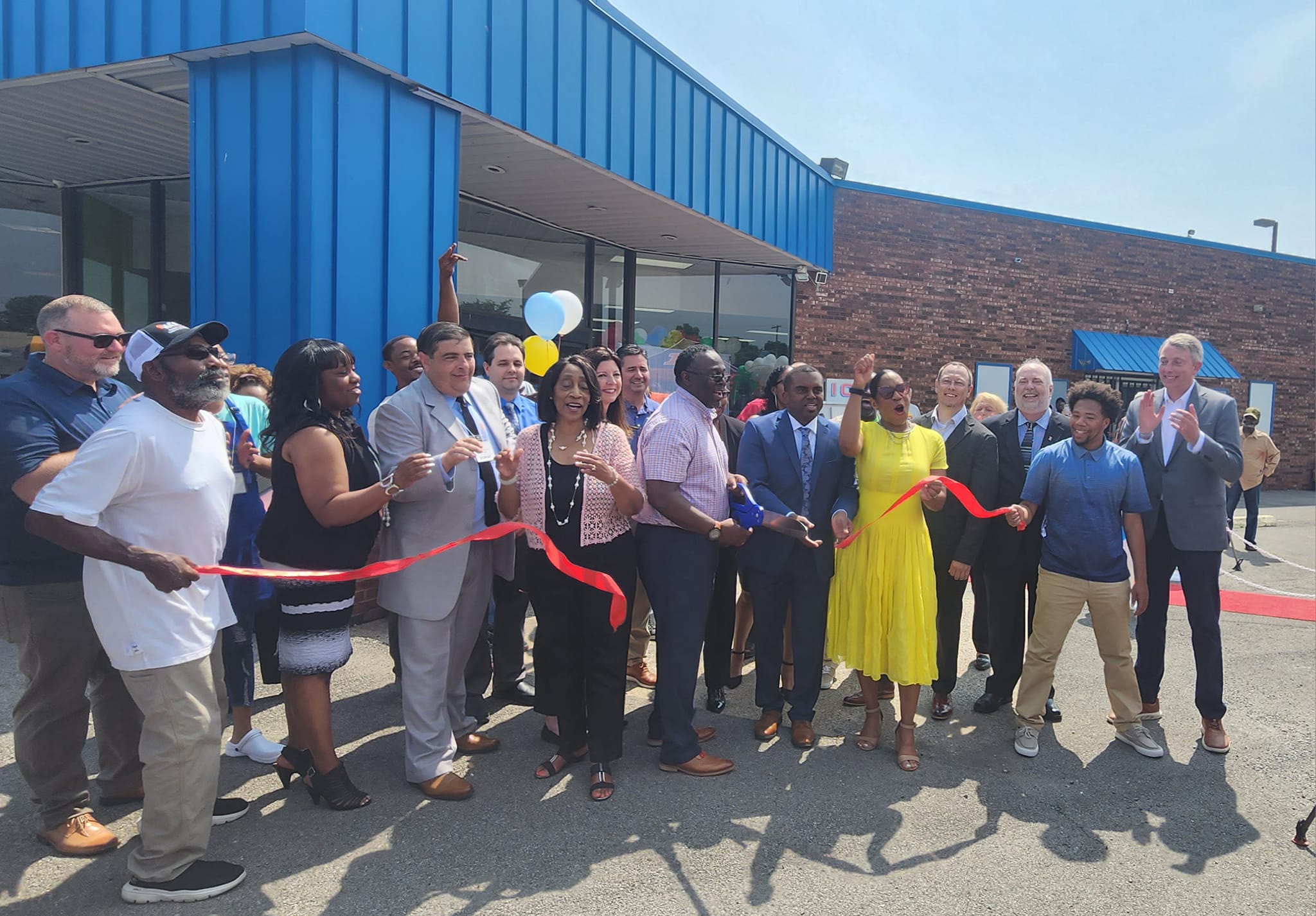
Grand Opening of Rise Community Market ribbon cutting ceremony with Lt. Governor
Rise Community Market Grand Opening, Cairo, Illinois
20+ yrs
Grocery operations experience across urban and rural markets
1 store
Opened and managed in a community that had gone years without full-service grocery access
4 tools
Free planning and operations tools built from real field needs
2-6 wks
Typical range for rapid feasibility and planning support, depending on scope
How We Help

Wherever you are in the process, we can help.

Grocery access problems do not all look the same, and neither do the people trying to solve them. We work with communities, store operators, nonprofits, and local governments. The situation determines the help, not the other way around.

01

Opening a New Store

Your community has lost its grocery store, or never had one. We help you evaluate the market honestly, understand the real capital requirements, identify the right ownership model, and build a case that funders and partners can take seriously.

Evaluate a New Store
02

Stabilizing a Store at Risk

Sometimes one store is the difference between local access and a food desert. Whether you are a store operator dealing with thin margins and rising costs, or a community watching a store you depend on struggle, we help identify what is actually driving the problem and what a realistic path forward looks like before closure becomes the only option.

Assess Store Risk
03

Succession and Ownership Transfer

An owner is retiring and the store's future is uncertain. Communities often lose grocery access not from failure, but from a gap in planning. We help structure transitions including cooperative conversions, employee ownership, and community-led acquisition.

Plan a Transition
Why It Matters

Grocery loss is a system failure. Communities need support before the damage is permanent.

When a community loses its last grocery store, the damage radiates far beyond food access. Health outcomes fall. Property values erode. Those without transportation are left hardest. The warning signs are often visible long before the doors close, but they are scattered across operations, capital, ownership, staffing, market conditions, and public data. We help stores and communities connect those pieces and act while there is still a path forward.

Interior grocery displays with frozen and perishable foods at an independent community grocery store
Closures happen faster than intervention
Most federal and state programs are triggered by documented loss, not predicted risk. Communities apply for help after the damage is already done.
📊
Public tools rarely show the full operating picture
Federal mapping can show where access is already insufficient, but it often misses the operational, financial, and local conditions that determine whether a store can survive.
🗺
The signals are there. They need to be made useful.
Sales trends, labor costs, SNAP participation, Census ACS, local ownership, transportation, and market conditions all tell part of the story. VFS turns those signals into practical tools and guidance.
V2 Now Live
Featured Tool

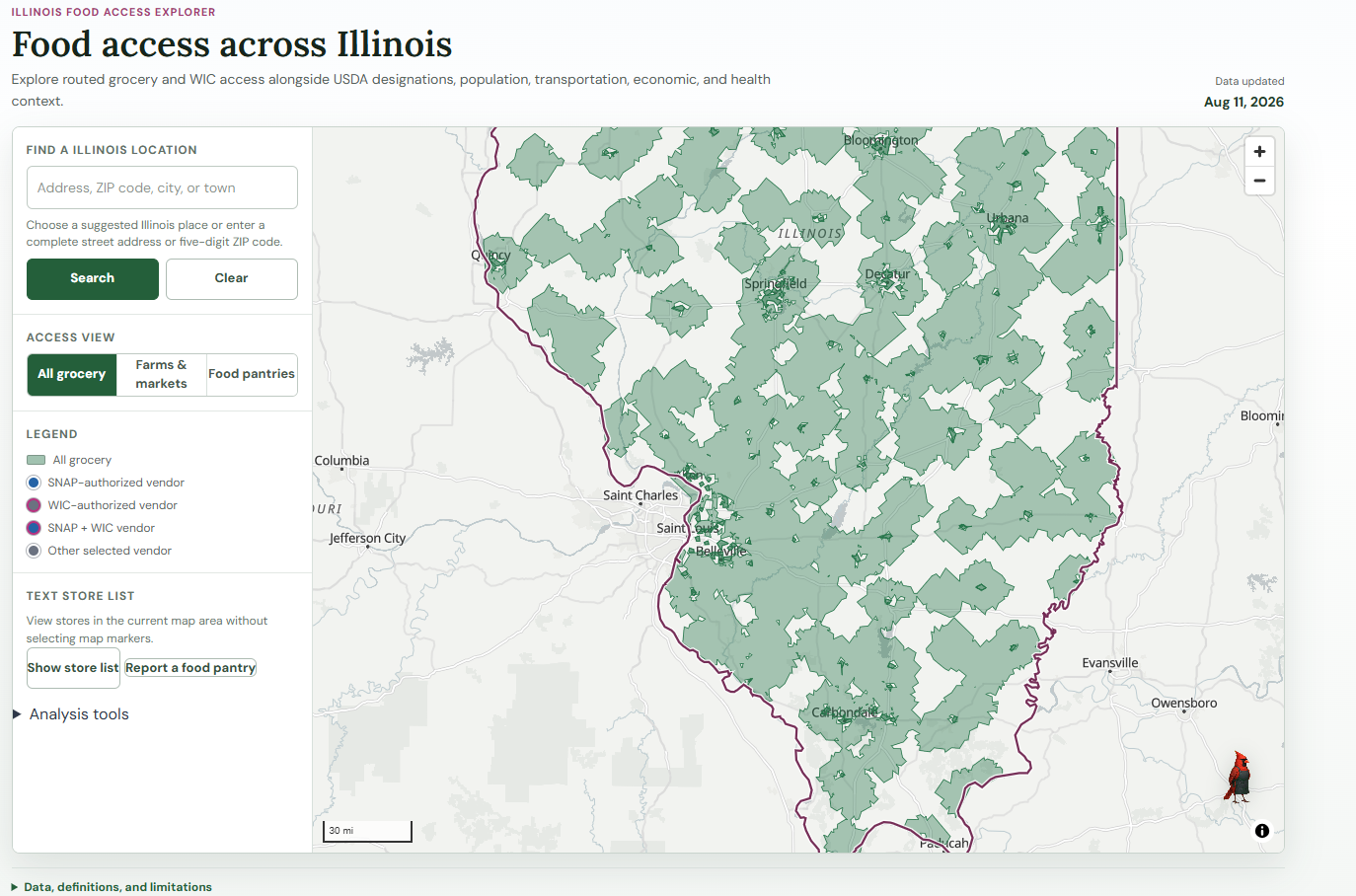
Illinois Food Access Map, built for practical planning

The Illinois Food Access Map helps communities, planners, store operators, and agencies see local food access conditions more clearly. It brings SNAP retailer classifications, WIC vendor data, Census-based access rings, and CDC health and economic indicators into one practical view.

The purpose is simple: make public data easier to use when a community is evaluating access, risk, investment, or the need for deeper analysis.

Currently covers Illinois only. This is a proof of concept built without paid API infrastructure. Scaling to real-time statewide or national coverage requires additional API infrastructure and resourcing.

Illinois Food Access Map V2 screenshot
New in V2

Updated data layers, improved performance, and clearer food access classifications. Both V1 and V2 remain available.

With proper resourcing

Real-time store verification via Google Maps API. Routing-based distance analysis on actual road networks. Population-weighted predictive modeling. Statewide and eventually national coverage.

Tools & Resources

Free tools that work right now.

Free tools are a starting point for first-pass estimates, maps, and operating decisions. Direct consulting is for situations where the decision is bigger, the timeline is urgent, or the numbers need interpretation. Most tools are free because the communities that need them most are already resource-constrained. Paid engagements can include rapid feasibility studies, capital planning, operational assessments, tool customization, and implementation support, with scope and cost discussed upfront.

GroundTruth risk assessment output screenshot
Risk Detection

GroundTruth

Identifies communities at risk of grocery loss before closures occur. SNAP, Census, and geospatial data produce a tract-level risk score. Account access helps manage API usage and development costs. No payment is required.

SNAP, Census ACS, geospatial inputs
Tract-level classification and risk scoring
Free signup, no payment required
Daily limits protect API costs during development
Create Free Account
Trade Area Estimator screenshot
Planning Tool

Trade Area Estimator

Evaluates the realistic annual sales potential of a proposed grocery store. A clear reality check before significant time or funding is committed.

Market size and sales potential screening
Designed for early-stage project evaluation
Free, no account required
Use the Estimator
Startup Capital Estimator screenshot
Planning Tool

Startup Capital Estimator

Estimates the full capital required to open a grocery store. Starting with too little capital is one of the most common and most preventable reasons community grocery projects fail.

Equipment, inventory, and operating cost modeling
Calibrated for independent and community stores
Free, no account required
Use the Estimator
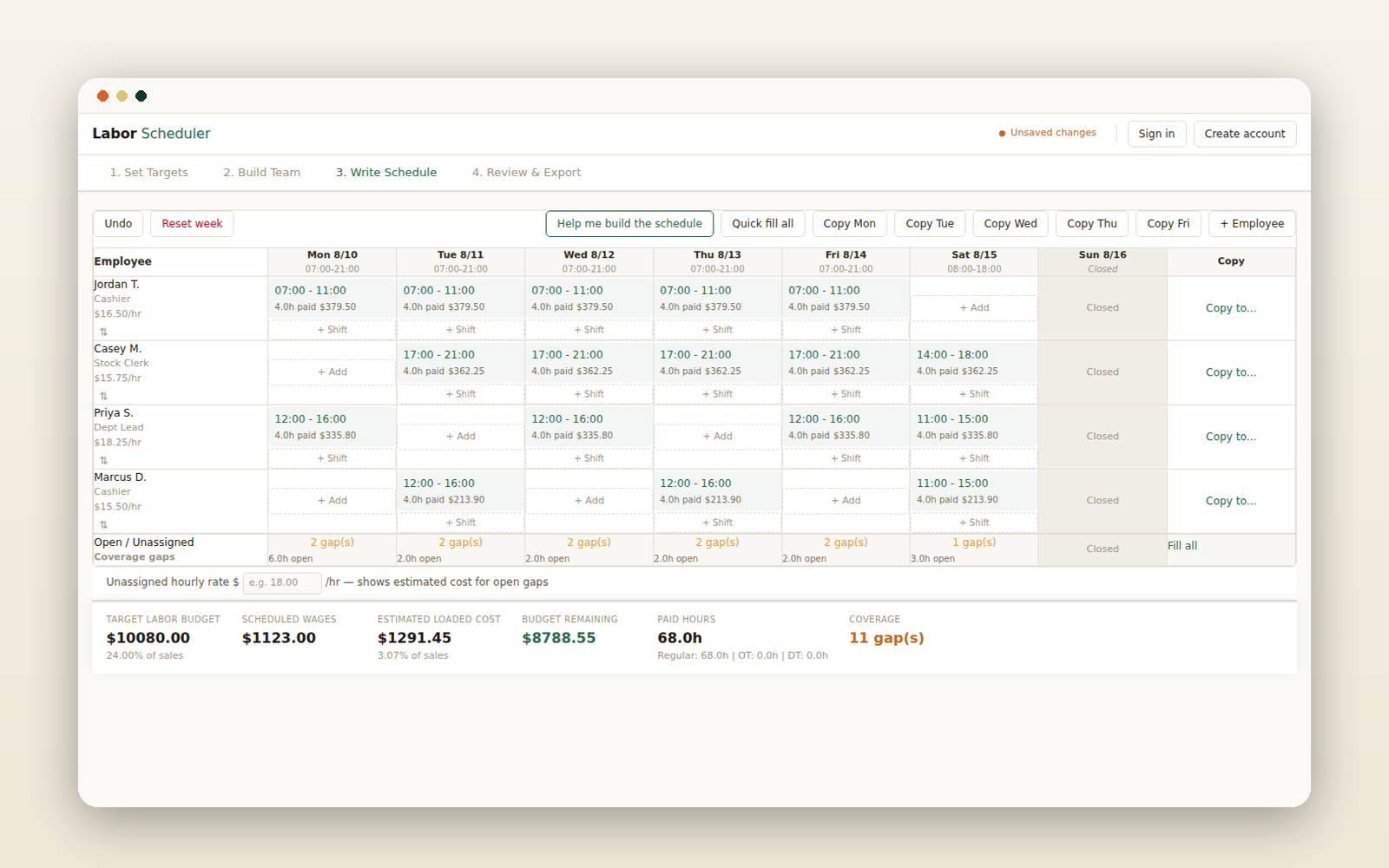
Labor Cost Manager screenshot showing weekly schedule, sales budget, and labor target inputs
Operations Tool

Labor Cost Manager

Schedules employees by department and calculates loaded labor costs with overtime. Useful for store managers controlling their biggest variable expense week to week, and for planners modeling labor requirements before a store opens.

Department-level scheduling and cost tracking
Overtime and meal break calculations built in
Flags when labor is running ahead of sales
PDF and CSV export for filing and analysis
Free, no account required
Open the Scheduler
Work With Us

Not sure where to start? That is exactly where we come in.

The free tools are a genuine starting point. If what you need goes deeper, we offer rapid feasibility studies, capital planning, operational assessments, tool customization, and implementation support. We will tell you honestly what we think the path forward looks like, what the work would involve, and what it would cost before anything begins.

Ask About Tools or Consulting First conversation is free
Who We Are

Built from two decades inside the work, not observing it.

VFS founder Robert Edwards spent more than twenty years working in grocery management across urban and rural markets in the Indianapolis, Cincinnati, and Louisville regions. He has been part of opening stores and closing them. He has learned how community relationships function as an operational variable, not a soft concept, and how the food preferences and economic realities of one region differ meaningfully from the next.

That experience brought him to Cairo, Illinois, where he opened Rise Community Market, the community's last full-service grocery store. He watched what it meant to people when the doors opened. He also watched the structural forces that closed it anyway: undercapitalization, grant funding structures that could not serve as operating capital, the compounding difficulty of running a grocery store in a market the larger system had long since written off.

Cairo was not the problem. Cairo did everything it could. That experience, and what it revealed about how communities lose stores they did everything right to keep, is what drives the work now. Robert supports state-level food access projects in Illinois and continues to build VFS as a long-term resource for communities that deserve better tools and better guidance than most of them currently have access to.

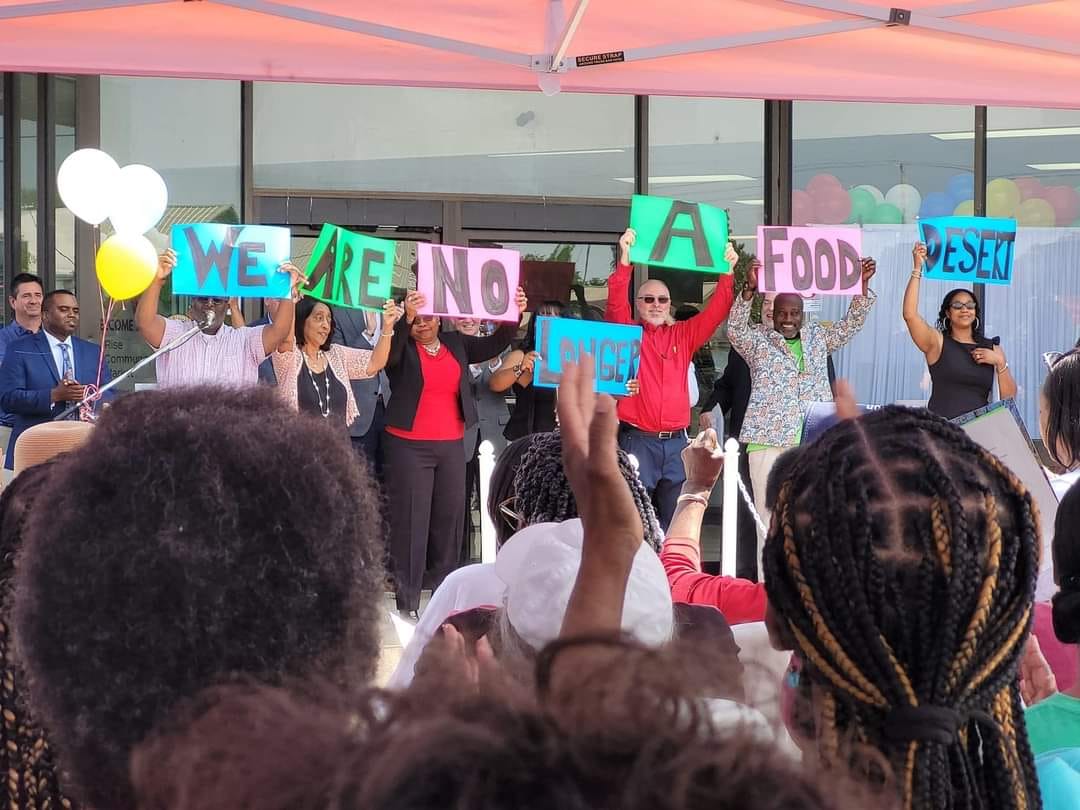
Rise Community Market board members holding We are no longer a food desert signs at grand opening

Cairo, Illinois. Grand opening of Rise Community Market.

State-Level Food Access Projects, Illinois
Supporting food access and grocery development work at the state level
University of Illinois Extension
Active working relationship on food systems and rural access research
Western Illinois University
Active working relationship supporting feasibility methodology and data access
20+ Years in Grocery Operations
Urban and rural markets, store openings and closures, across multiple regions and ownership structures

Tell us where you are. We will take it from there.

Whether you are trying to open a store, keep one open, plan for a transition, or just trying to figure out what your community's options even are, reach out. The first conversation is free and there is no obligation. We will tell you honestly what we think, and if we are not the right fit, we will tell you that too.

Opening, stabilization, and succession support
Feasibility studies and capital planning
Tool access and walkthroughs
Response within 48 hours

Press inquiries: redwards@viablefood.org

We respond to every inquiry within 48 hours. If the need is urgent, email redwards@viablefood.org directly.